Resume mistakes marketing professionals should avoid
A hiring manager I know once printed a CV and slid it across the table to me. The candidate had listed "managed social media" and "boosted brand awareness" across four different jobs. Not one number. Not one campaign name. She looked at me and said: "So which of these two people do I hire?" Both, neither, no idea. That's what an unquantified marketing resume does to the person reading it.
The generic advice is everywhere: check your spelling, keep it to a page, use a clean font. Fine. But marketing resumes fail for reasons that have almost nothing to do with typos. They fail because marketing work is measurable, and most candidates refuse to measure it. That's the first mistake, and the rest follow from it.
Key takeaways
- Marketing achievements must be quantified — percentages, budgets, conversion rates, audience sizes — or they read as filler.
- Vanity metrics without business context are a red flag, not a selling point.
- A portfolio of campaign links, ads, or published work beats three paragraphs of adjectives.
- Applicant tracking systems parse your file before a human does — design for both.
- If you spot an error after sending, a short corrected version can still work in your favor — silent hope never does.
The number-one mistake: describing work instead of results
Marketing is one of the few fields where every claim can be backed by a figure. Traffic, click-through rate, cost per acquisition, email list growth, revenue attributed to a channel. Yet most CVs in the field read like job descriptions, copied and pasted from the offer that originally hired the person.
"Responsible for email marketing and social channels." Great. So what happened? Did the open rate go up? Did you build the list from 3,000 to 12,000 subscribers? Did the paid spend get cut in half for the same number of leads?
What a rewrite actually looks like
| Before (vague) | After (measured) |
|---|---|
| Managed email newsletter | Grew newsletter from 4,200 to 11,800 subscribers in 14 months; open rate up from 18% to 31% |
| Handled paid social campaigns | Ran LinkedIn and Meta paid campaigns with a cost per lead of $23 on a monthly budget of $9,000 |
| Supported brand relaunch | Rebuilt messaging for 3 product lines; sales team reported the new one-pager halved their objection-handling time (I don't have a hard number here — the sales lead estimated it) |
That last row matters. You don't need perfect data for every line. You need to be honest about what you measured and what you estimated. Recruiters smell invented precision instantly.
The trap of claiming everything alone
One more nuance: if a product launch tripled revenue while you were running ads for it, you didn't triple revenue. You ran ads that contributed. Overclaiming is a red flag on its own — the interviewer will ask how attribution worked, and the answer "well, my campaign was part of the mix" told three minutes too late kills trust.
What are three things you should not put on your resume?
Three items that reliably hurt marketing candidates: an unprofessional email address, a pile of soft skills with no evidence behind them, and school-era details that stopped being relevant years ago. The first is self-explanatory but still shows up — a handle you made at nineteen does not belong on a document sent to a CMO.
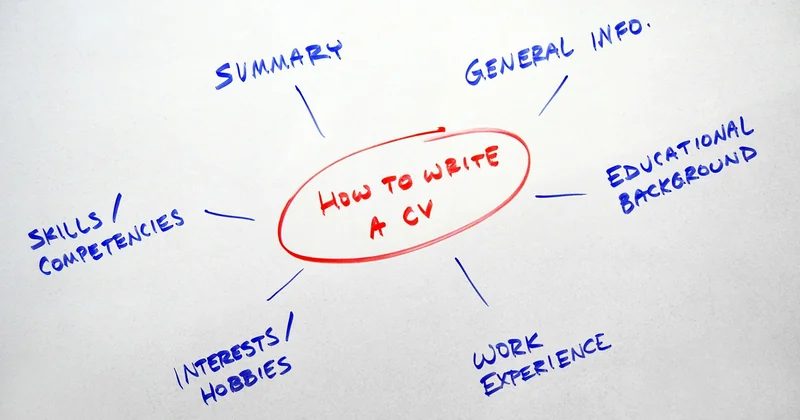
The soft skills section is the subtler trap. "Creative," "team player," "detail-oriented" — every one of those is a claim, and a claim without a story is noise. If you want to demonstrate creativity, link the campaign. If you want to demonstrate rigor, show the test and the lift it produced.
The third: high school, old part-time jobs from a decade ago, hobbies that don't travel. In marketing, the space those lines take is space you should be using for a portfolio link or a quantified bullet.
What are the common resume mistakes?
beyond the vague-results problem, a few patterns repeat in nearly every batch of applications I see.
- Keyword-less files. Applicant tracking systems rank or filter by keywords from the job description. A CV that never uses the words "SEO," "lifecycle," or "attribution" is invisible before a human looks.
- Layouts that parse as garbage. Two-column templates, text boxes, tables, and graphics embedded in a PDF are a bet against the software. Plain, single-column, standard headings.
- One page for one role. Sending the same CV to a growth role and a content role is fine only if the CV speaks both dialects. Usually it speaks neither.
- Technology lists without context. "HubSpot, GA4, Salesforce, Marketo, Klaviyo, Figma, SQL." Do you operate them daily or once saw a demo?
- Inconsistent dates or overlapping jobs. Not a deal-breaker, but a gap or overlap you don't explain invites a question you'll have to answer cold.
The pattern across all five: the resume was written for the writer, not for the reader. A recruiter spends tens of seconds on a first pass. Design for that skim, or accept the recycle bin.
What are red flags on a resume?
Hiring managers develop a specific instinct for marketing resumes, and it differs from the one they use for other roles. Here are the signals that make a marketing CV suspicious, roughly in order of how often I've heard them cited:

- Percentages without any baseline ("increased engagement by 300%" — from what, measured how, over what period?)
- Job titles that inflate scope ("Head of Growth" at a company where you were the only marketer)
- A portfolio link that's dead, behind a login, or full of stock assets you can't prove you made
- Every skill marked "expert," including things that require years of practice
- Unexplained employment gaps — not the gap itself, but the absence of any mention
- Buzzword density that displaces evidence ("leveraged synergies to drive holistic brand elevation" — this line exists, and yes, I made it up, but you've seen its cousins)
The through-line: recruiters read for verifiability. A claim you can point to in a portfolio, a case study, or a reference is worth ten adjectives. A claim you can't is a liability.
The marketing blind spot: no portfolio, no proof
Doctors cite cases. Developers share repositories. Writers show bylines. Marketers, for reasons that remain mysterious, often show nothing.
If you've ever produced a campaign, a landing page, a content series, a webinar, or an ad set you can show publicly, link it. If the work is confidential, describe the brief, the constraints, your role, and the outcome in a short case study PDF — three or four sentences per project is plenty. One candidate I know started attaching a two-page case study appendix to her CV. Same experience, same job titles, and she started getting callbacks from roles she'd been ignored for the previous six months. The change wasn't the work. It was the proof.
The portfolio doesn't have to be a website. A link to published articles, a slide of campaign visuals with the key metrics underneath, a clean one-page summary of a project. Effort here counts for more than polish.
What to do if there is a mistake on your resume?
If the file has already gone out and the error is material — a wrong date, a misspelled employer name, a figure you mis-stated — send a corrected version. Send it quickly, and keep the note short: "I noticed a formatting error in the CV I submitted yesterday; attached is the corrected file. Apologies for the extra version." Three lines. No over-apologizing, no long explanation, no resending the whole application package.

If the mistake is minor (a stray comma, slightly inconsistent spacing) and the role is one where precision is part of the job, fix it for future applications and let this one go — the recruiter likely won't notice, and flagging it draws attention to a defect that didn't matter.
Two things not to do: submit a revised version without saying it's a revision (that's how files get confused), and quietly assume the mistake cost you the job when the real issue was somewhere else.
The one habit that fixes all of this
The competitive part of any resume isn't the writing. It's the habit of keeping a record of what actually happened in your role — the numbers, the campaign links, the results, the failures worth mentioning. A marketing CV written from memory at midnight before the deadline loses to one written from a running log of accomplishments kept across the year.
Start a notes file today. One line per month: what shipped, what moved, what you'd do differently. Then the resume stops being a guessing game and starts being a report — and the person on the other side of the table knows, immediately, who they're hiring.